E-Auto-Förderung in Germany: Save Up to €6,000 on New EVs
Germany's active E-Auto-Förderung program provides private households with up to €6,000 in stackable subsidies for new electric passenger cars.
3 min read
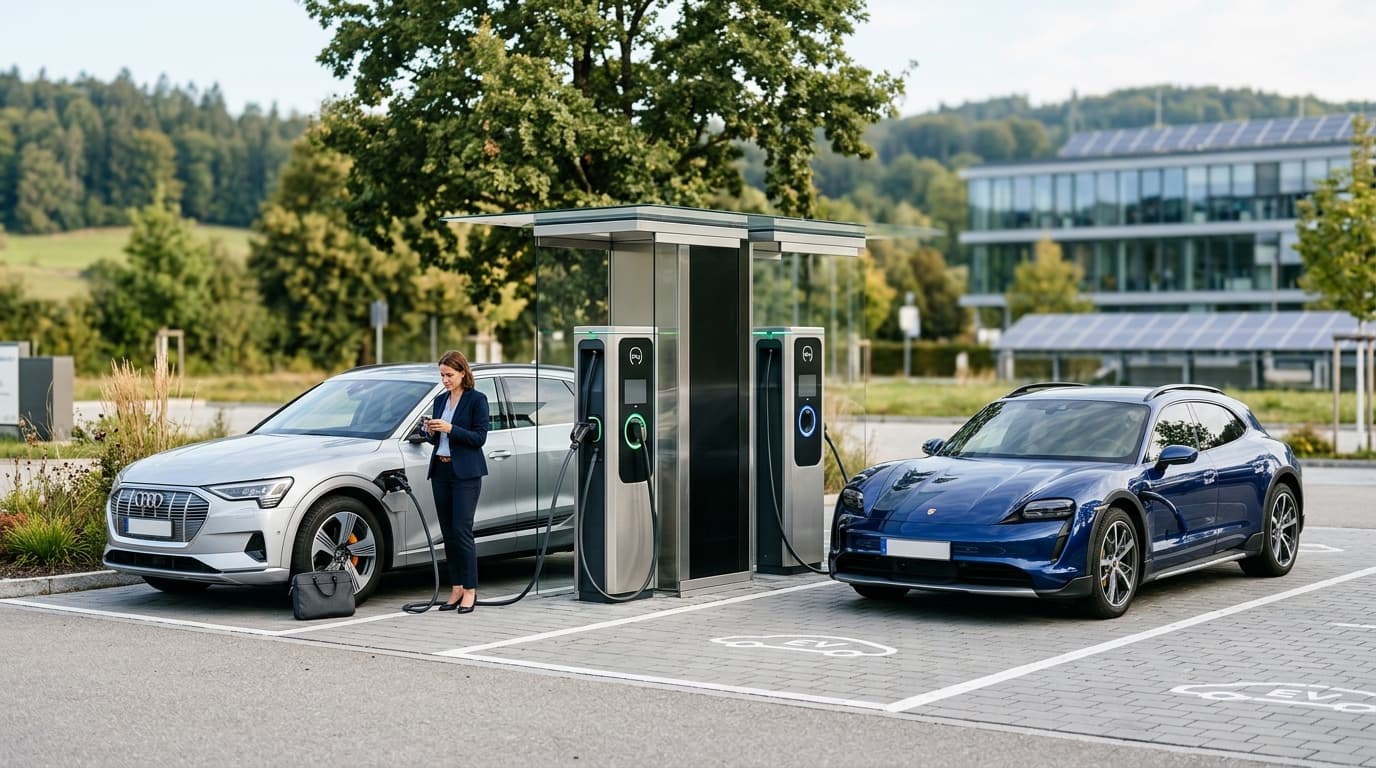
Germany's new domestic subsidy program, the E-Auto-Förderung, is now open to help private households purchase or lease new electric passenger cars. Eligible citizens can claim a base grant of up to 3,000 EUR, which can be stacked with family and social bonuses to reach a maximum of 6,000 EUR. Backed by a 3,000,000,000 EUR budget, the program is fully active and accepting online applications retroactively for vehicles registered since January 1, 2026.
- Base Subsidy (BEV)
- 3,000 EUR
- Maximum Combined Subsidy
- Up to 6,000 EUR
- Total Program Budget
- 3,000,000,000 EUR
- Target Group
- Private households in Germany
- Minimum Holding Period
- 36 months
Programme Overview and Status
Administered by the Bundesamt für Wirtschaft und Ausfuhrkontrolle (BAFA), the E-Auto-Förderung represents Germany's primary instrument for passenger vehicle decarbonization. Responsible oversight is held by the Bundesministerium für Umwelt, Klimaschutz, Naturschutz und nukleare Sicherheit (BMUKN). The program officially launched on January 1, 2026, with the online application portal opening on May 19, 2026.
This 3,000,000,000 EUR initiative is projected to fund approximately 800,000 electric vehicles. It is scheduled to remain active until December 31, 2029, or until its budget allocation is exhausted. By retroactively covering qualifying vehicles purchased or leased since the beginning of 2026, the program avoids any funding gaps for early buyers.
Who Qualifies for the Subsidy?
The E-Auto-Förderung strictly targets private households and individuals (Privatpersonen) with their primary residence in Germany. Commercial entities, municipal fleets, registered associations, and vehicles held as business assets (Betriebsvermögen) are entirely excluded from this program, ensuring that public funds are directed exclusively to citizen mobility.
Eligible vehicles must belong to the newly manufactured passenger vehicle class (EU classification M1). This includes battery-electric vehicles (BEV), fuel cell electric vehicles (FCEV), plug-in hybrids (PHEV), and range-extended electric vehicles (REEV). No used vehicles, young used vehicles, or day registrations (Tageszulassungen) qualify. Additionally, both purchases and leases are permitted, provided the contract establishes a minimum ownership or lease duration of 36 months.
Subsidy Amounts and Stacking Rules
The base incentive depends heavily on the vehicle's powertrain. Newly purchased or leased BEVs and FCEVs qualify for a flat 3,000 EUR base grant. For PHEVs and REEVs, a 1,500 EUR base grant is available, provided the vehicle is registered for the first time by June 30, 2027, has a maximum of 60g CO2/km emission profile, and delivers a minimum of 80 km purely electric range.
To support equitable transition, the program introduces stackable social bonuses. Households with a taxable annual income (zvE) strictly under 60,000 EUR receive a Tier 1 Social Scaling Bonus of 1,000 EUR. If the household's annual taxable income is under 45,000 EUR, an additional Tier 2 Social Scaling Bonus of 1,000 EUR is stacked, bringing the total social scaling bonus to 2,000 EUR.
Furthermore, families can claim a Child Bonus of 500 EUR per eligible child under 18 residing in the household. This child bonus is capped at two children (maximum 1,000 EUR). By stacking the 3,000 EUR BEV base grant, the 2,000 EUR social bonuses, and the 1,000 EUR child bonus, an eligible lower-income family can secure up to 6,000 EUR in total aid.
Document Requirements and How to Apply
Applications must be submitted digitally via the official online portal at foerderzentrale.gov.de within 12 months of the vehicle's first registration date. Because the program operates as a retroactive reimbursement, there is no discount applied at the point of sale. Applicants must complete their vehicle purchase or lease, register the vehicle, and then apply for reimbursement.
The application requires specific documentation, including redacted income tax assessments (Einkommensteuerbescheide) to verify income tiers, the vehicle registration certificate (Zulassungsbescheinigung Teil I), and proof of child benefits (Kindergeldnachweis) if claiming the family bonus. For PHEV or REEV models exceeding 60g CO2/km, an EU Certificate of Conformity (CoC) is required to verify the 80 km electric range requirement. Approved grants are paid directly via SEPA bank transfer.
Market and Comparison Context
Unlike previous iterations of German electric vehicle incentives, the E-Auto-Förderung represents a transition from universal flat subsidies to an income-adjusted mechanism. According to CivilAuto, the addition of a strict 36-month holding period significantly curbs speculative rapid resale, a common criticism of previous short-term frameworks. By prioritizing private households and incorporating layered social bonuses, the German government aims to ensure that lower-to-middle-income families have direct, viable access to emission-free transportation.